The Ultimate Guide to the MCAT: How I Studied, What I Used, and What I’d Do Differently
Table of Contents
Introduction
This next section is about the Medical College Admission Test (MCAT).
The MCAT is a standardized, multiple-choice, computer-based exam required for admission to nearly all U.S. medical schools.
The exam lasts about 7.5–8 hours, so yes—it is long and exhausting. I’ll make a separate post about what to do the day before and the day of the exam. This post is mainly about how I studied for the MCAT and what I learned from the process.
MCAT Exam Structure
The MCAT is divided into four sections:
Chemical and Physical Foundations of Biological Systems
- 95 minutes
- 59 questions
- Tests:
- General Chemistry
- Organic Chemistry
- Physics
- Biochemistry
Critical Analysis and Reasoning Skills (CARS)
- 90 minutes
- 53 questions
This section tests your reading comprehension and reasoning skills. You’ll read passages on a variety of topics and answer questions based on them. Think of it as an English or literature comprehension exam.
Biological and Biochemical Foundations of Living Systems
- 95 minutes
- 59 questions
Tests:
- Biology
- Biochemistry
- Basic Chemistry
Psychological, Social, and Biological Foundations of Behavior
- 95 minutes
- 59 questions
Tests:
- Psychology
- Sociology
This was actually my favorite section!
MCAT Scoring
Each section is scored from 118–132, giving a total score range of 472–528.
A score of 500 is considered the midpoint.
When I applied, the average accepted MCAT score was around 512, but it has continued increasing each year and is now closer to 513.
The exam costs approximately $345.
If cost is a concern, look into the AAMC Fee Assistance Program.
The MCAT is offered multiple times each year, usually from January through September.
One piece of advice: register early. Testing centers fill up quickly.
When I Took the MCAT
I took my MCAT during January of my junior year, the same year I applied to medical school.
Looking back…
I probably would have taken it the summer before junior year instead.
Everything worked out, but I didn’t take the exam as seriously during the semester as I should have.
What I Wish I Had Done Differently
One thing I learned is that it is really difficult to balance MCAT studying with college classes.
I originally planned to study consistently beginning in August.
That…didn’t happen.
Instead, I ended up doing almost all of my studying during winter break, which was only about 1.5 months.
Looking back, I wish I had:
- Started earlier
- Used the summer before junior year
- Given myself three full months instead of only six weeks
If I could do it again, I would absolutely choose the summer.
My Overall Study Strategy
During the semester I mostly:
- Read Kaplan books
- Reviewed content
During winter break I focused on:
- UWorld questions
- AAMC practice exams
- Reviewing mistakes
Most of my improvement came from practice questions, not reading.
What I Thought About Anki
One thing I wish I had understood earlier was Anki.
I saw people talking about it everywhere on Reddit, but I didn’t realize how useful it actually was.
I personally did not use Anki.
Instead, I relied on:
- Kaplan
- UWorld
- Jack Westin
- AAMC practice exams
If I could go back, I would definitely incorporate Anki.
One important thing to remember:
Anki is for remembering content—not learning new content.
You should already know most of the material from your undergraduate prerequisite courses.
The review books are simply there to refresh your memory.
Don’t spend months rereading books.
The real learning happens through:
- Practice questions
- Reviewing mistakes
- Active recall
Resources I Used
1. Kaplan Review Books
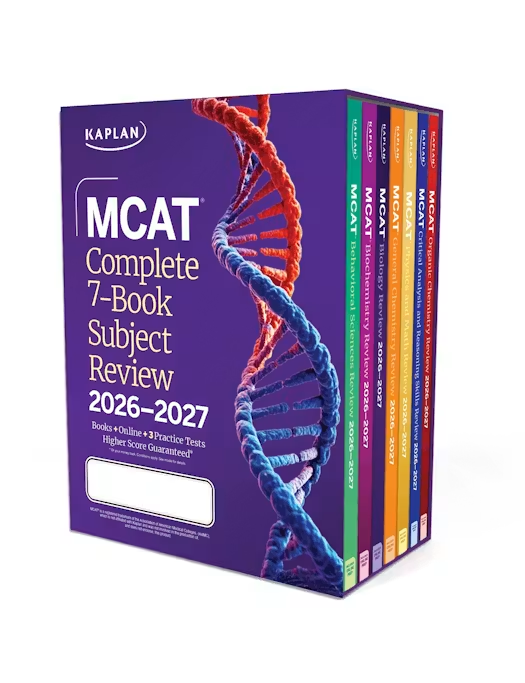
This was my primary content review resource.
I used:
Kaplan Complete 7-Book MCAT Subject Review Set
I actually borrowed mine from a friend.
If you know someone who’s already in medical school, ask if they’ll let you borrow theirs—it can save you a lot of money.
Looking back, I think reading the books alone was too passive.
I spent too much time reading and not enough time applying the information.
If I were to take it again, I’d spend about a month skimming the books and then move on to practice questions.
2. UWorld ⭐ (My Favorite Resource)
This is where the majority of my studying happened.
UWorld contains over 3,000 MCAT-style practice questions with incredibly detailed explanations.
Honestly, I learned more from reading the explanations than I did from reading textbooks.
During winter break, I was completing around 100 questions per day.
It isn’t free. I purchased the 180-day subscription, which cost about $349.
Expensive? Yes.
Worth it? Absolutely.
3. Jack Westin (FREE)
This was my go-to resource for CARS practice.
Jack Westin offers free daily passages that are extremely similar to the actual MCAT.
I completed about five passages every day.
At first, CARS was my weakest section.
By the time I took the actual MCAT…
It became my highest section.
I honestly credit Jack Westin for that improvement.
If you’re struggling with CARS, don’t skip this resource.
Jack Westin also offers 6 free full length exams which are great, but the most representative exams are going to be the AAMC Practice Exams, which aren’t free unfortunately.
4. AAMC Practice Exams
These are the official practice exams.
Save them until you’re closer to your actual exam date.
I purchased six exams.
My schedule looked something like this:
- One diagnostic exam
- Five practice exams leading up to test day
At first I took one every two weeks.
Closer to the exam, I switched to taking one every week.
The Biggest Mistake Students Make
Taking a practice exam…
…and then never reviewing it.
Reviewing your mistakes is honestly more important than taking the exam itself.
My routine looked like this:
Saturday
- Take the full-length exam
Sunday
- Spend almost the entire day reviewing every question I got wrong
Then throughout the week I returned to:
- Kaplan review
- UWorld
- Jack Westin
Repeat.
My Weekly Study Schedule
During my dedicated study period, this was roughly my schedule:
Monday–Friday
- UWorld
- Jack Westin
- Review weak topics
Saturday
- Full-length AAMC exam
Sunday
- Review every incorrect question
Then repeat.
Final Thoughts
Yes, this was a long post—but I hope it saves you some time.
If I could summarize everything into a few key lessons, it would be:
- Start earlier than you think you need to.
- Don’t spend months only reading review books.
- Prioritize practice questions.
- Review every mistake.
- Consider using Anki.
- Use official AAMC exams near the end of your studying.
I also have another post coming soon covering what to do the day before and the day of your MCAT, so stay tuned!